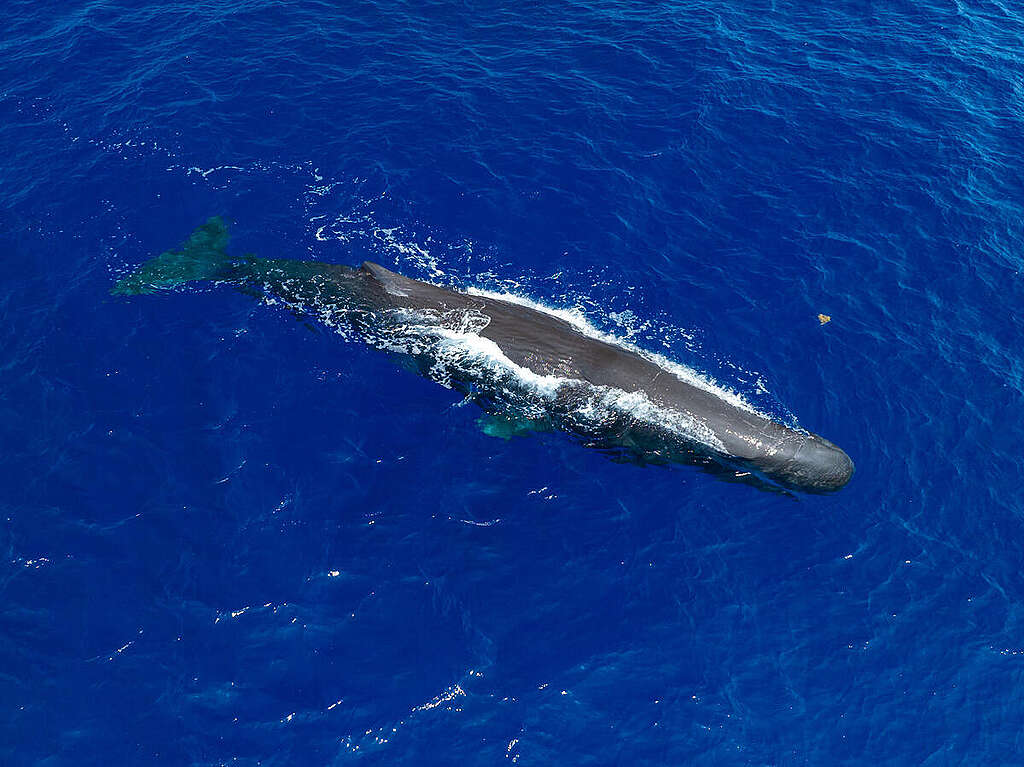
The article, published this month in the prestigious scientific journal “Ethics in Science and Environmental Politics” by distinguished marine biologists from around the world, demonstrates that the impacts on marine “megafauna” (particularly on whales and dolphins) from seismic surveys and hydrocarbon extraction are numerous and catastrophic and include physical injuries (e.g., hearing damage, chronic stress, hormonal changes), behavioral changes (e.g., changes in feeding and resting patterns), as well as potential cetacean strandings and deaths.
Seismic surveys, which are initially conducted to map the seabed prior to the implementation of oil and gas extraction projects, require the use of so-called air guns that produce extremely loud low-frequency sounds with a range of up to 4,000 kilometers. Cetaceans’ navigation, communication, foraging, and overall survival literally depend on sound. Furthermore, the displacement of populations from their habitat is a highly problematic scenario, since species such as the fin whale avoid noisy areas for days on end.
As a result, this process is one of the most harmful and dangerous activities for marine life, as the sounds it produces are among the loudest in the ocean—louder than any known biological sound.
Two of the three cases examined in the report are the subject of pending legal proceedings initiated by ClientEarth, WWF Greece, and Greenpeace Greece. The three organizations filed a formal complaint with the European Commission in 2023, pointing out that oil and natural gas exploration and exploitation projects were being approved in the ecologically significant area of the Hellenic Trench, in close proximity to protected areas, despite the clear risks they pose to marine species and in violation of EU nature protection law.
Francesco Maletto, a lawyer at ClientEarth, said: “The devastating impact of fossil fuels on the climate is widely known, especially in Greece. However, this new research reveals the scale at which this industry is wreaking havoc on ecosystems at every level. The Hellenic Trench is one of the most biodiverse regions in the entire Mediterranean. Yet, the widespread noise caused by hydrocarbon exploration and extraction is devastating for marine mammals. Will the Commission stand idly by while this happens—in direct violation of EU law—or will it intervene to protect some of Europe’s most endangered marine species?”
Anna Vafeiadou, head of the legal department at WWF Greece, stated: “Greece’s seas are still among the healthiest in Europe, precisely because of the absence of destructive activities such as oil and gas drilling. We are sleepwalking toward an environmental disaster if these drilling plans go ahead. This scientific article published today highlights the serious risks to our seas and marine life posed by oil and gas projects. The science is clear: the measures that can be taken to mitigate the impacts of hydrocarbon exploration on the unique ecosystem of the Hellenic Trench are limited. We call on the European Commission to intervene and ensure the enforcement of European legislation before irreparable damage is caused.”
Costas Kaloudis, climate and energy campaigner at Greenpeace’s Greece, stated: “With 20% of Greece’s marine areas having been allocated for hydrocarbon exploration and an extremely weak institutional framework for protecting the marine environment, the future of the marine mammals we are trying to protect looks bleak. The Greek government’s promises of thorough procedures to prevent environmental damage and ensure that marine mammals are not negatively affected by hydrocarbon exploration and drilling appear to have fallen on deaf ears. It is time for the European Commission to step up pressure on the Greek authorities: future generations should also be able to enjoy thriving biodiversity in Greek waters.”
EU environmental legislation requires Greek authorities to fully assess the impact that such activities will have on threatened marine biodiversity in protected areas before giving the green light for their implementation. This scientific publication confirms the arguments put forward in the complaint: that the assessments for projects approved in the Mediterranean were inadequate and did not rely on the best available scientific knowledge, as required by EU law.
This publication raises critical questions regarding the validity of the findings that led to the approval of the projects, which appears to have been based on outdated, incomplete, and inaccurate data. It was also found that the assessments underestimated the serious risks posed by activities such as seismic surveys to endangered species, such as fin whales, based on unscientific assumptions, such as that the animals would simply “move away” from the source of the noise.
Following this publication, the three organizations reiterate their call on the European Commission to take action against the widespread violations of EU nature conservation legislation in the region.
The scientific study: