June 2026

Coordinated action in Greece, Cyprus and Italy to protect sea turtles against the climate crisis

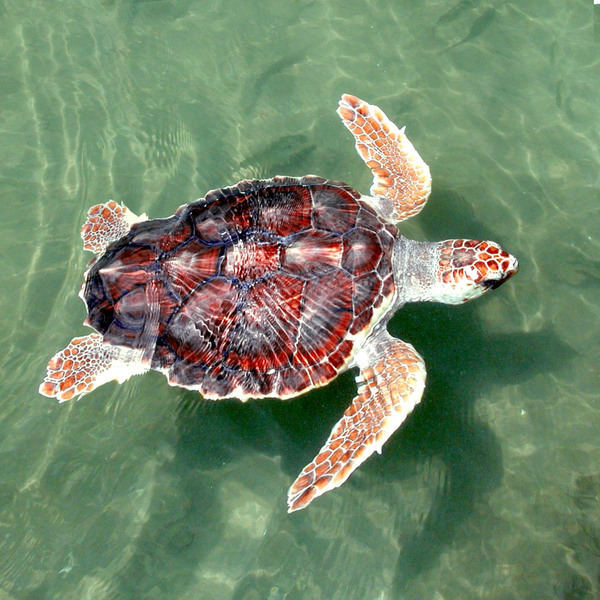
  • In Greece, ARCHELON continues its long-standing commitment by monitoring and protecting important nesting habitats of the loggerhead turtle (Caretta caretta) in Crete, the Peloponnese, and Zakynthos. Within the framework of the EU co-funded program LIFE ADAPTS, these field activities have now expanded. Within the framework of LIFE ADAPTS, field activities have expanded to new project areas in Epirus and Corfu, where the first surveys of the season have already been carried out and sea turtle tracks have been recorded. Systematic monitoring activities will also begin in Epirus and Corfu during the current nesting season, strengthening efforts to assess and protect these emerging nesting areas. Drone surveys are being used to support the assessment of nesting sites and the risk of sea level rise as a result of  climate change, while temperature loggers have been installed on selected beaches to collect data on sand temperatures and nesting conditions, contributing to a better understanding of the potential impacts of climate change on sea turtle reproduction.


  • In Cyprus monitoring activities are already under way. Over 100 nests of both species have been located and protected on the beaches monitored for the project and data collection on temperature has started in order to evaluate which nesting beaches could be more resilient to the effects of climate change. Beach profiles are being completed to collect essential data needed for the development of a Sea Level Rise risk classification of reproductive sites.


  • In Italy, from Sicily to Calabria to the Gulf of Taranto and further north in Tuscany, monitoring activities are already underway, involving hundreds of operators and volunteers each year in the search, protection, and management of nests along Italian beaches. Extensive work that has brought significant results in recent years, with the number of identified nests constantly increasing, especially in the southern regions but also along the northernmost coasts. In Italy celebrations will take place in Sicily, the region where the first nests of the season were unveiled, the Torre Salsa Oasis and the OA Sicilia Area Mediterranea will release a sea turtle off the coast of Agrigento with a training session on turtle recovery activities in need. Also in Sicily, on June 16th and 19th, at 6 pm on Mondello beach and at 5 pm on Balestrate beach (Palermo), meetings will be held with residents and school groups to raise awareness of the characteristics and threats facing sea turtles, and beach clean-up initiatives will be organized. In Apulia, operators from the Molfetta CRTM, which recovers an average of 400 turtles in distress each year, will also release a rehabilitated sea turtle, while in Basilicata the Policoro Recovery Center, located at the WWF Oasis, will remain open to visitors who can witness the ongoing activities.

Despite the differences between the three countries, the activities converge towards common objectives:

• understand how sea rise affects breeding sites

• identify turtle breeding sites that may continue to produce males despite rising temperatures

• protect key beaches and habitats, increasingly exposed to erosion and human activity

• develop replicable adaptation strategies throughout the Mediterranean

• involve citizens, operators and institutions in a shared approach

The project thus builds a concrete response to a global challenge: ensuring a future for iconic species such as sea turtles means making our coasts and the communities that inhabit them more resilient too.

“Protecting sea turtles means protecting our coasts and preparing them for future challenges. The solutions for these species are the same ones we also need to address the climate crisis”.