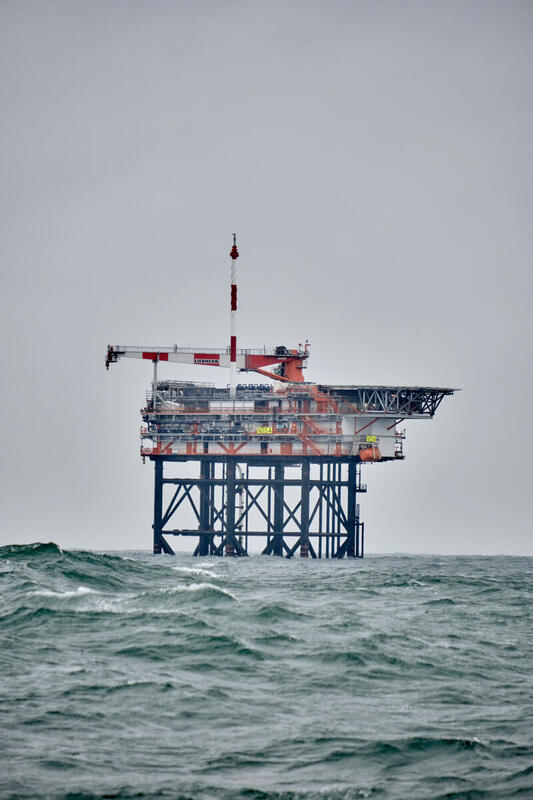
The environmental organizations Hellenic Society for the Protection of Nature, Hellenic Ornithological Society, Pelagos Institute for Cetacean Research, Greenpeace, iSea, MEDASSET, and WWF Greece, congratulate the citizens and organizations of Magnesia who tenaciously defended what should be self-evident: the right to clean and vibrant seas and a safe environment, free from dangerous and polluting facilities.
The decision by the Ministry of Environment and Energy to reject the application for an environmental permit for the LNG “Argo” terminal is a significant victory for civil society and vindicates the struggle waged by the citizens and organizations of Magnesia with well-documented evidence, consistency, and determination. However, it stands in stark contrast to the approval granted for the second ASFA within the “Thrace Marine Area” Natura site, in the ecologically invaluable waters off Alexandroupoli.
Magnesia has reason to celebrate: it has proven that local communities can defend their homeland against projects that increase dependence on fossil fuels and harm the climate, while attempting to ignore local impacts, such as those on the marine environment and citizens’ sense of security.
We call on the Ministry of Environment and Energy to adopt the same environmentally responsible stance and reject the plans for the second LNG terminal in Alexandroupoli, the Thrace LNG Terminal. New natural gas infrastructure cannot be promoted within or adjacent to sensitive ecosystems, in areas of high environmental value, when it is explicitly prohibited by national legislation for Natura 2000 sites, and, moreover, without a full assessment of the impacts of greenhouse gas emissions and without compliance with the European Methane Regulation.
The cases regarding the existing LNG terminal in Alexandroupoli and the new ASFA Thracian terminal have been challenged by environmental organizations before the Council of State for a number of extremely serious reasons, including the failure to assess and implement measures to mitigate emissions of methane and other greenhouse gases, the critically severe impacts on the marine ecosystem protected by European and national legislation, the prohibition under the Biodiversity Law of such hazardous facilities in Natura areas, and the failure to adopt measures to protect the critically endangered harbor porpoise (Phocoena phocoena), whose only habitat in Greece is the Thracian Sea.