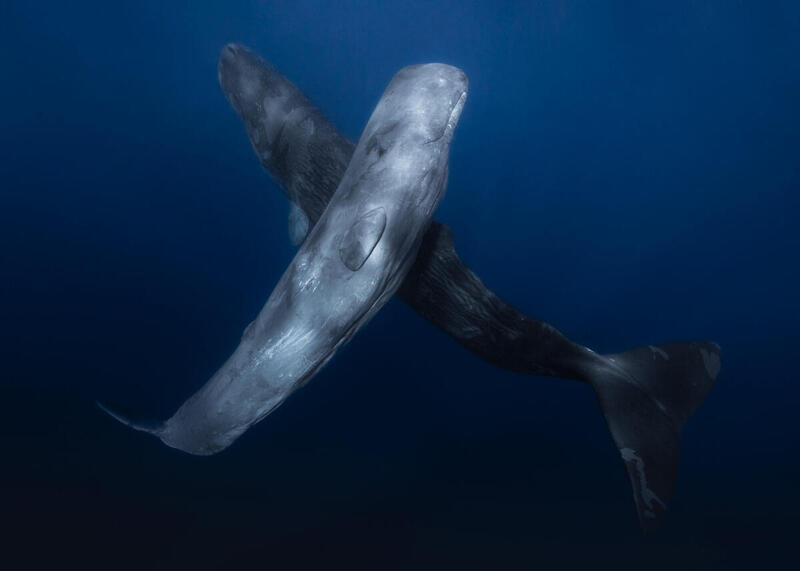
Can AI technology help us decode the language of other animals, such as sperm whales? According to biologist and founder of the Cetacean Translation Initiative (project CETI), David Gruber, yes.
The CETI project records and “translates” the voices of whales using specially designed AI programs that allow the categorization and coding of the characteristic codas produced by the animals. By recognizing patterns and characteristic sounds, the research team records the social meanings behind each sound and reveals the complexity of communication between them, both individually and at the group level.
For the CETI research team, this study is not of encyclopedic interest, but a tool for promoting the protection of animals and their ecosystems. According to Gruber, deciphering language opens the door to empathy for the experiences of animals. In the case of whales, contact with their language sheds light on the very real threats to their world—a world of sound. Noise pollution (due to human activity, maritime traffic, mining, etc.) is a major threat to whales and other cetaceans.
However, the CETI team believes that listening to the animals’ own voices and observing the impact of human pressures on their behavior and communication can inform legislation and encourage more effective protection.
Furthermore, the potential decoding of another species’ speech could lead to a re-evaluation of our relationship with animals, as discoveries about empathy, emotions, and intelligence have done in the past.
With marine conservation increasingly taking center stage in international discourse, discoveries that strengthen the case for protecting other species are essential. Wild species are mainly protected through the protection of their habitats, and so framing these discoveries within the broader discussions on marine protection—the Ocean Treaty, the European Biodiversity Strategy,The 30X30 goal—is essential.