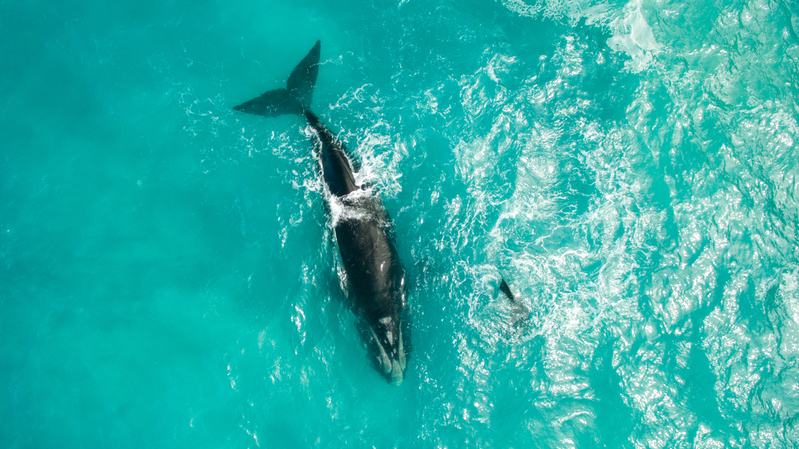
In August 1970, the inspired Roger Payne released a groundbreaking album about whale songs. Using hydrophone recordings, capturing the animals’ natural sounds and enriching them with melodies, Payne gave the world a glimpse into the world beneath the waves—a world based on sound. Whales, like all cetaceans, live a life defined by sound. Through sound, they navigate, hunt, communicate, mate, and create cultural practices.
This rich world is now under threat, and scientists warn that blue whales in particular are becoming alarmingly silent.
In a study in California, experts used hydrophones aimed to record changes in underwater melodies over the years, attempting to decipher the state of ecosystems, interactions between species, and normal or abnormal behaviors. As whales are now having to survive in an ocean altered by climate change, noise pollution, shipping, and industrial activity, sound could be a useful indicator.
Sound recordings during intense heat waves revealed a decline in blue whale song of up to 40%—extreme heat waves and the warming of the waters significantly reduced the numbers of krill available, the main food source for blue whales, while also triggering changes in underwater chemistry that enhanced the growth of toxic algae.
“When we have these very warm years and marine heatwaves, we’re not just talking about temperature,” explains oceanographer Kelly Benoit-Bird. “The whole system changes, and we don’t have krill. So animals that rely on krill are out of luck”.
Continued global warming disproportionately affects the oceans, which absorb more than 90% of excess heat produced by global warming.
The same research showed that during periods of heatwaves and therefore reduced food supply, blue whales devote less energy to reproduction, causing a potential imbalance in population numbers and marine ecology, showing that the consequences of a heatwave persist long after it has ended.
“It is possible that one of these events could be the tipping point from which there is no return. And that matters. For the carbon absorbed by the sea, the fish we eat, and the future of marine ecosystems.” Benoit-Bird.