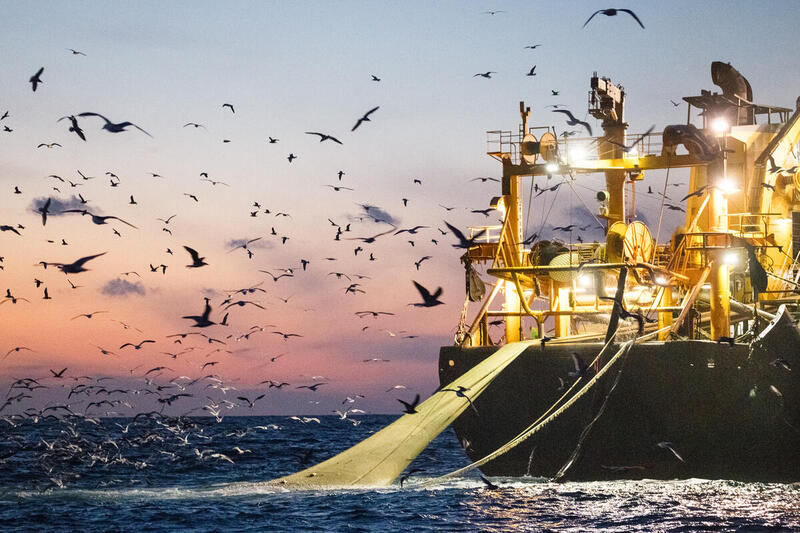
“The destruction of the rainforest happens in plain sight. But bottom trawling – a practice in which heavy fishing nets are dragged across the ocean floor, dredging up carbon that’s long been stored in the seabed – is a kind of deforestation beneath the waves. Bottom trawling is invisible to us on land, but it has devastating effects on the climate and ecosystems,” writes environmentalist and founder of National Geographic Pristine Sea, Enric Sala.
This practice creates multiple problems for marine ecosystems, such as high bycatch rates (marine non-target species caught in gear) and destruction of the seabed. Sala demonstrates another devastating consequence of this practice: the release of trapped carbon.
According to relevant scientific studies, 55-60% of the carbon released by trawlers—a total of approximately 370 million metric tons per year—ends up in the atmosphere. Of these, the remaining 40-45% stays in the ocean, where it contributes to water acidification, damaging marine flora and fauna.
Despite the negative balance between benefits and losses, trawling remains widespread, even in areas that (should) require protection. Marine protected areas remain exposed to overexploitation and the consequences of such harmful practices, a situation that is exacerbated by inadequate protection regimes for marine protected areas.
It should be noted that the protection of marine protected areas from trawling also concerns Greece, being one of the 21 commitments made by the Greek government , in order to achieve the 30X30 goal. However, as demonstrated by the 2d We Sea You assessment report, this target has only been achieved by 20%, which means that the country’s seas remain exposed.